





What is Machine Learning? A Clear Explanation With Real Examples
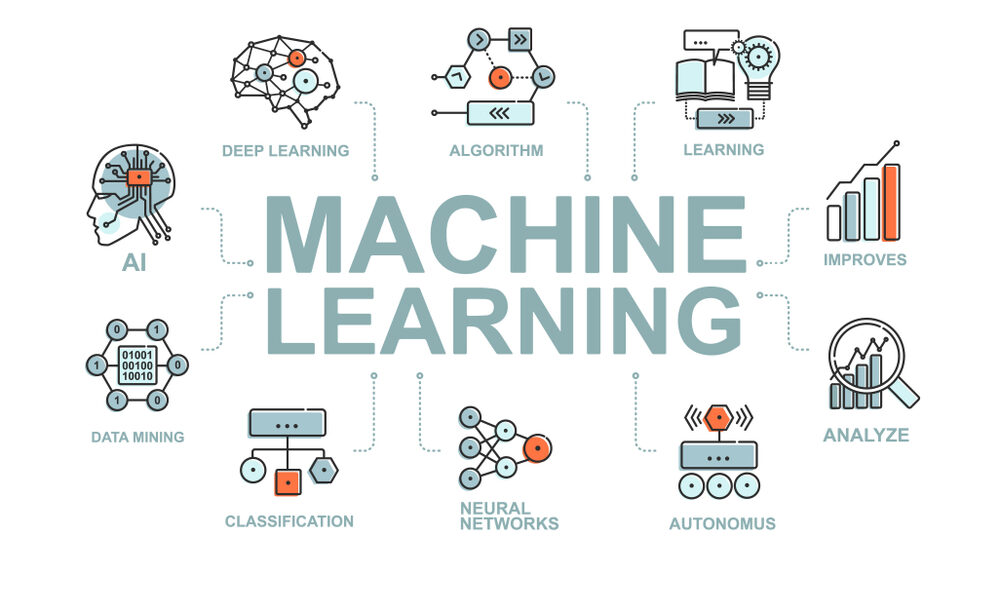
Machine Learning (ML) is a branch of Artificial Intelligence that allows a system to learn from data instead of following a set of fixed, hand‑crafted rules. Instead of telling a machine exactly what to do, we give it examples so it can discover patterns and make decisions on its own.
It’s like teaching someone to recognize fruits: you don’t explain the math behind an apple — you show them many apples until they learn to identify one.
Why Machine Learning Exists
Modern systems generate more data than any human could analyze:
- images
- text
- sensors
- transactions
- user behavior
Machine Learning exists to extract value from that data and automate tasks that were previously impossible or too expensive to solve manually.
The Core Idea Behind Machine Learning
An ML model learns a relationship between:
- Inputs (what we know)
- Outputs (what we want to predict)
Examples:
- Input: house size → Output: estimated price
- Input: image pixels → Output: “cat” or “dog”
- Input: purchase history → Output: product recommendation
The model learns this relationship by analyzing many examples.
How a Model Learns (without technical jargon)
- We give it data
- It makes predictions
- It compares its predictions with the real answer
- It calculates how wrong it was
- It adjusts its internal parameters
- It repeats this process thousands of times
It’s a continuous improvement loop.
The Main Types of Machine Learning
Although ML is a broad field, most problems fall into three categories:
1) Supervised Learning
The model learns from labeled examples.
- price prediction
- image classification
- spam detection
2) Unsupervised Learning
The model finds patterns without predefined labels.
- customer segmentation
- anomaly detection
- dimensionality reduction
3) Reinforcement Learning
The model learns through trial and error.
- robotics
- games
- route optimization
Where Machine Learning Is Used Today
ML powers many of the tools we use daily:
- Netflix recommendations
- spam filters
- medical diagnosis support
- fraud detection
- chatbots and assistants
- autonomous vehicles
- cloud optimization
Machine Learning is not the future — it’s the present.
What Machine Learning Is NOT
To avoid misconceptions:
- It’s not magic
- It’s not “just statistics”
- It’s not a model that always gets it right
- It’s not an uncontrollable black box
- You don’t need to be a mathematician to understand it
ML is engineering + data + logic.
One‑Sentence Summary
Machine Learning is the discipline that enables systems to learn patterns from data to make predictions or decisions without being explicitly programmed.
Next in the series
In the next article, we’ll explore the core components of Machine Learning: data, features, algorithms, and loss functions — the foundation of every modern ML model.